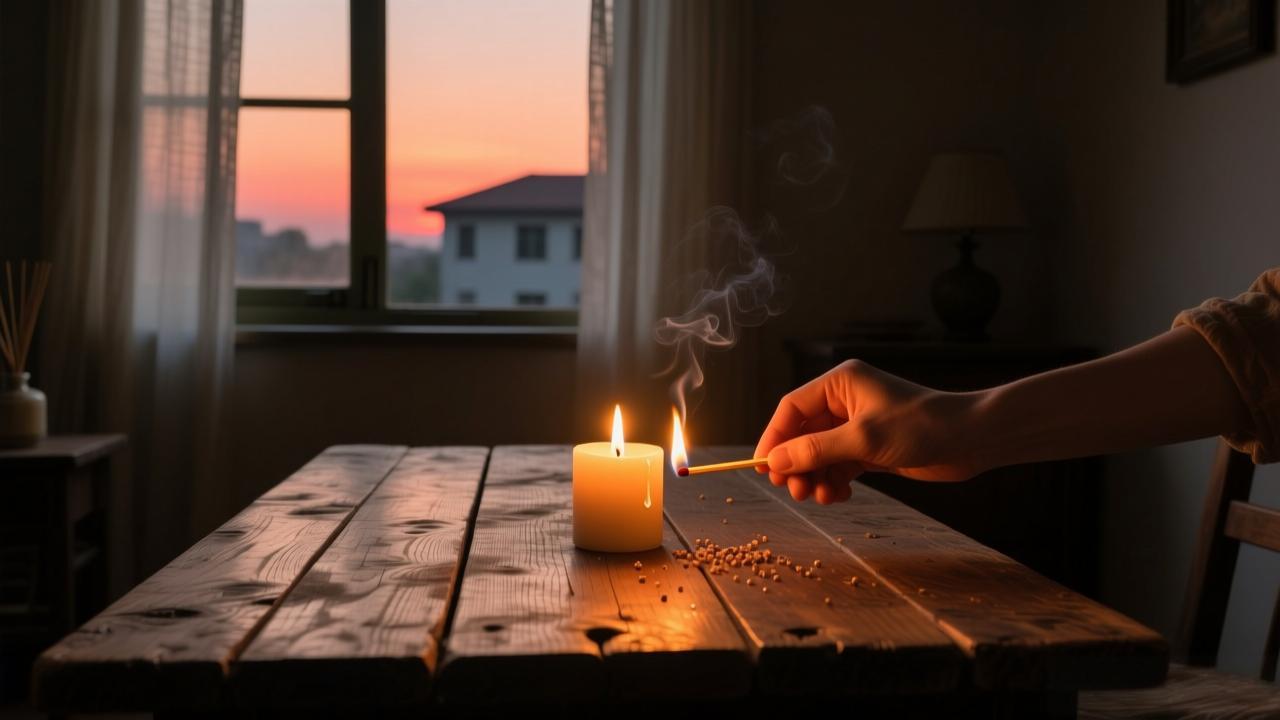
There are moments when nothing feels dramatically wrong, yet everything feels slightly off. The day has been long. The room feels flat. Your mind keeps replaying unfinished thoughts. In those moments, lighting a scented candle can feel like a small, almost insignificant action — and yet, it often changes everything.
Scented candles don’t fix problems. They don’t erase stress or magically turn a bad day into a perfect one. What they do instead is quieter and more subtle: they help us transition. From noise to calm. From tension to ease. From mental clutter to a sense of presence.
This gentle shift is where their real power lies.
Scent and emotion are deeply connected
Smell is the only sense that travels directly to the parts of the brain responsible for memory and emotion. Unlike sight or sound, scent doesn’t ask for interpretation. It bypasses logic and lands straight in feeling.
That’s why a familiar fragrance can instantly change how you feel in a room. Lavender might soften the edges of anxiety. Citrus can lift a heavy mood. Warm notes like vanilla or sandalwood often create a feeling of safety and comfort.
When a candle is lit, the scent unfolds slowly. It doesn’t overwhelm the senses the way a sudden spray or artificial fragrance can. Instead, it creates a steady, predictable presence — one that the nervous system responds to almost without notice.
Over time, your body begins to associate that scent with a certain state of mind. Calm. Focus. Rest. Contentment.
Creating emotional transitions in daily life
One of the most underrated benefits of scented candles is their ability to mark transitions.
Modern life rarely gives us clean boundaries. Work bleeds into evening. Screens follow us into bed. Our minds don’t get clear signals that it’s time to shift gears.
Lighting a candle can become a simple ritual that tells your brain: something is changing now.
Lighting a candle at the end of the workday can signal that it’s time to unwind
Lighting one during an evening routine can help the body prepare for rest
Lighting one during a quiet morning can set a grounded, intentional tone for the day
These moments don’t need to be dramatic. In fact, the more ordinary they are, the more effective they become. A candle doesn’t demand attention — it gently reshapes the atmosphere around you.
Why the glow matters as much as the scent
It’s not only fragrance that influences mood. Candlelight itself plays an important role.
Soft, warm light reduces visual stimulation. It tells the body that it’s safe to slow down. Compared to harsh overhead lighting or screens, a candle creates shadows, depth, and stillness.
This kind of lighting encourages the mind to wander less and rest more. It’s easier to breathe deeply. Easier to sit with yourself without needing constant distraction.
When scent and light work together, they create an environment that supports emotional regulation — not by forcing calm, but by making space for it.
Joy doesn’t have to be loud
We often associate joy with excitement: celebrations, big moments, visible happiness. But there is another kind of joy that’s quieter and more sustainable.
It’s the feeling of being comfortable in your own space. Of enjoying a moment without needing to document it. Of noticing small pleasures without rushing past them.
Scented candles tend to support this quieter joy. They don’t demand productivity or performance. They simply exist alongside you, making the moment feel more complete.
This is especially valuable during periods of emotional fatigue. When motivation is low or the world feels overwhelming, small sensory comforts can help restore balance without requiring effort.
Mood support without pressure
Unlike many wellness tools, scented candles don’t come with expectations.
There’s no right posture. No routine you must follow. No outcome you need to achieve.
You can light a candle for five minutes or five hours. You can sit quietly or move around the room. You can notice the scent consciously or let it fade into the background.
This lack of pressure is part of what makes candles emotionally supportive. They don’t ask you to improve yourself. They simply offer an atmosphere where you can feel a little better than before.
For people who feel overwhelmed by structured self-care routines, candles often feel accessible and non-intimidating.
Different moods, different scents
While scent preferences are personal, certain fragrance families tend to support specific emotional states.
Floral and herbal scents like lavender, chamomile, and neroli are often associated with relaxation and emotional softness. They’re commonly used in evening routines or quiet moments.
Fresh and citrus notes such as bergamot, lemon, or grapefruit can feel uplifting and energizing without being overstimulating. They’re often helpful during slow mornings or mental slumps.
Warm, grounding scents like vanilla, cedarwood, amber, or sandalwood tend to create a sense of comfort and stability. Many people gravitate toward these scents during colder months or emotionally demanding times.
The key is not to chase a “perfect” scent, but to notice how different fragrances make you feel — and to trust those responses.
Candles as emotional anchors
Over time, scented candles can become emotional anchors.
If you consistently light the same candle during moments of calm, reflection, or rest, your body begins to associate that scent with safety and ease. Eventually, simply smelling it can trigger a similar emotional response.
This is one reason candles are often used during meditation, journaling, or bedtime routines. They help condition the mind to enter a certain state more easily.
Even on difficult days, lighting a familiar candle can provide a sense of continuity — a reminder that some things remain steady.
Choosing candles with intention
Mood support isn’t only about fragrance. The quality of a candle matters.
Clean-burning candles made with natural waxes tend to produce a softer scent throw and a calmer atmosphere. They’re less likely to feel overwhelming or irritating, especially in small spaces.
Simple designs, neutral containers, and thoughtfully chosen scents help the candle blend into daily life rather than dominate it. When a candle feels natural in your space, it’s easier to incorporate it into routine moments.
The goal isn’t to impress, but to support how you want to feel.
Small rituals, meaningful impact
Lighting a scented candle may seem like a small act, but small acts repeated over time shape how we experience our days.
They create pauses. They invite awareness. They remind us to slow down, even briefly.
In a world that often demands constant attention and output, these moments of softness matter. They help us reconnect with ourselves and with the present moment.
Scented candles don’t promise happiness. What they offer instead is something more realistic and more sustainable: gentle mood shifts, emotional comfort, and quiet enjoyment woven into everyday life.
And sometimes, that’s exactly what we need.